

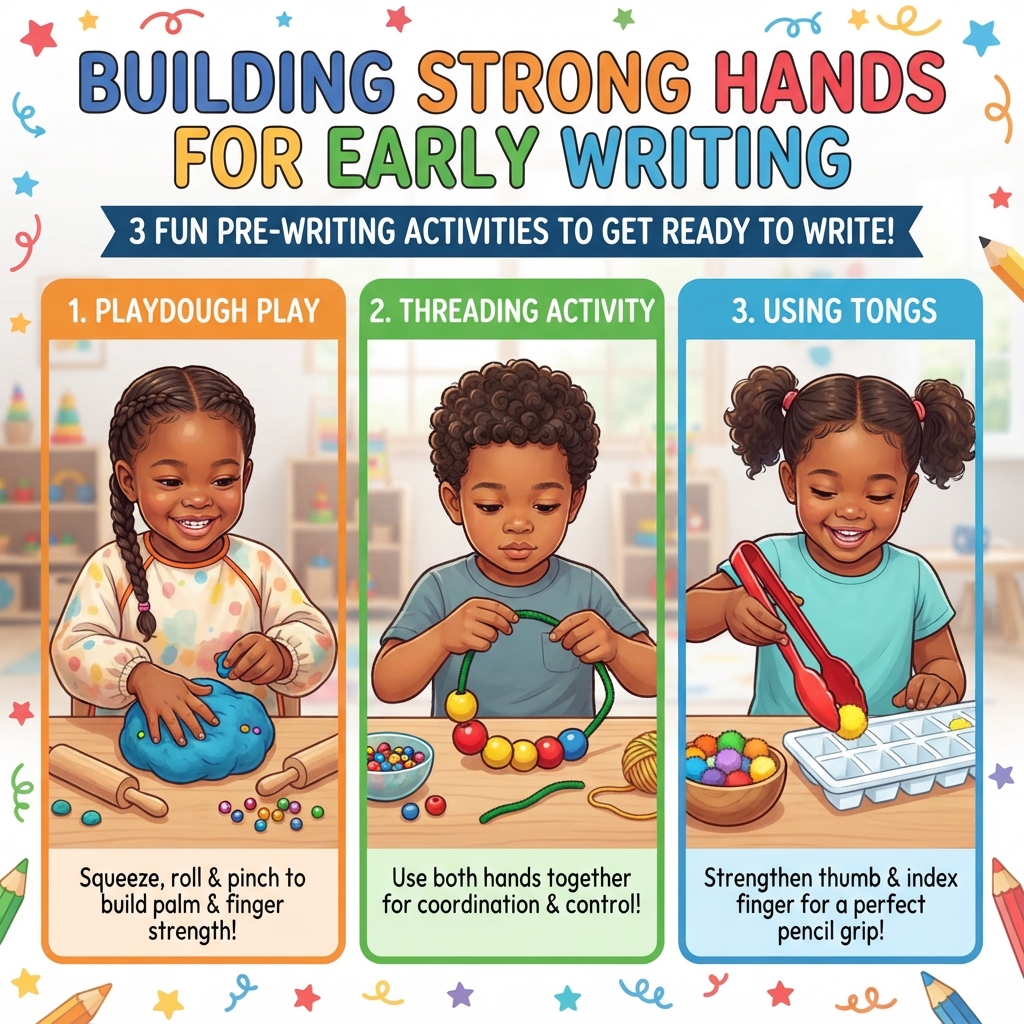
Before children can hold a pencil and start writing, they need to build up hand strength, finger coordination, and control. Fun, hands-on activities make this important preparation feel like play. When parents and teachers use playful exercises that build fine motor skills and help both hands work together, they give toddlers the confidence and skills they need to start handwriting.
Here are three important pre-writing activities that help young children get ready to write:
1. Playdough Play
- What It Is: Kids squeeze, roll, squish, and pinch modelling dough or putty into different shapes.
- Why It Works: Playdough gives young hands a natural workout. Squeezing a ball of dough builds the small muscles in the palm, while pinching smaller pieces helps kids use their thumb and index finger. These are the same fingers they will use to hold a pencil correctly.
- How to Enhance It: Hide small objects like beads, buttons, or coins inside a ball of dough and ask children to dig them out using just their thumb, index, and middle fingers. You can also have them roll long dough snakes and pinch them into small pieces to build finger strength and control.
2. Threading Activity
- What It Is: Kids string large wooden beads, pasta, or cut straws onto yarn, pipe cleaners, or shoelaces.
- Why It Works: Threading helps kids learn to use both hands together. One hand holds the string still while the other moves the bead. This skill teaches them how to hold paper with one hand while writing or cutting with the other.
- How to Enhance It: For beginners, start with sturdy materials like threading pasta onto a pipe cleaner or a dry spaghetti stick stuck in playdough. Once they get the hang of it, move on to flexible shoelaces or yarn with a taped end.
3. Using Tongs
- What It Is: Kids use plastic kitchen tongs, tweezers, or mini squeezers to pick up small objects like pom-poms, beads, or cotton balls and move them into bowls.
- Why It Works: Using tongs copies the squeezing motion needed for scissors and holding a pencil. Squeezing tongs builds strength between the thumb and index finger, which helps kids write for longer without getting tired.
- How to Enhance It: Make the activity into a colour-sorting game or a counting challenge using ice cube trays or muffin tins. As children’s hand strength grows, switch from large salad tongs to smaller tools like jumbo tweezers or chopstick helpers to help them use their fingers more precisely.
Unlock Your Preschooler’s Writing Success
Is your little one preparing for handwriting? Before they ever hold a pencil to write letters, they need to build hand strength, wrist control, and stroke confidence through play!
Our Preschool Pre-Writing & Fine Motor Course guides your child step by step, from hands-on sensory fun like playdough and tongs to mastering lines, circles, and shapes.
What You Get:
- Fun, research-backed pre-writing activities and videos.
- Instant access to our printable workbook bundles (including vertical/horizontal lines, circles, loops, crosses, and squares).
- Practical teaching tips to build a comfortable tripod grip with ease.