
Common nouns are the everyday names for people, places, animals, and things. Kids see common nouns, but can they identify them in a sentence? Our Nouns Worksheet makes this easy through fun colouring and writing activities, helping little learners master the basics of grammar, one naming word at a time.
What is a Noun?
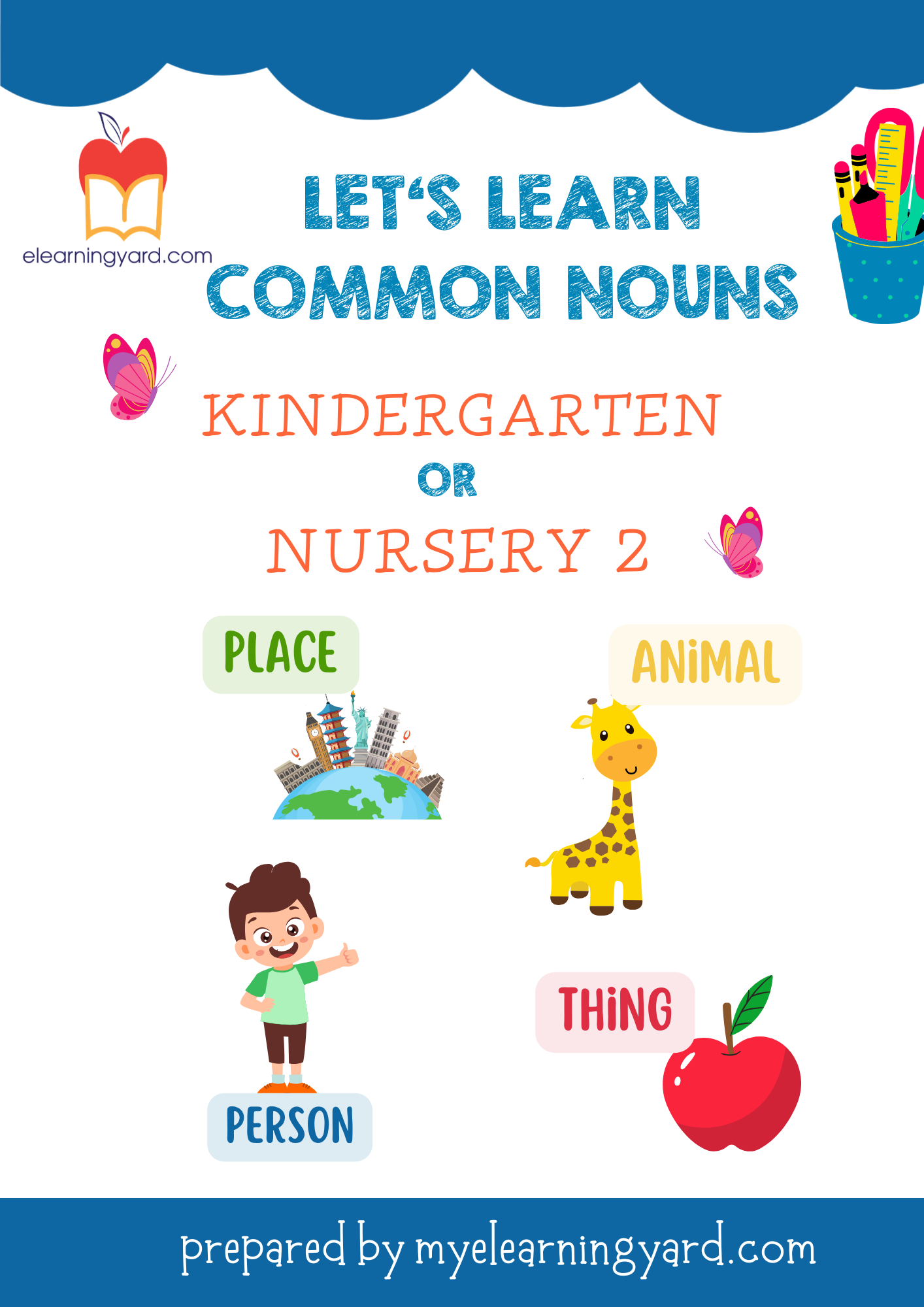
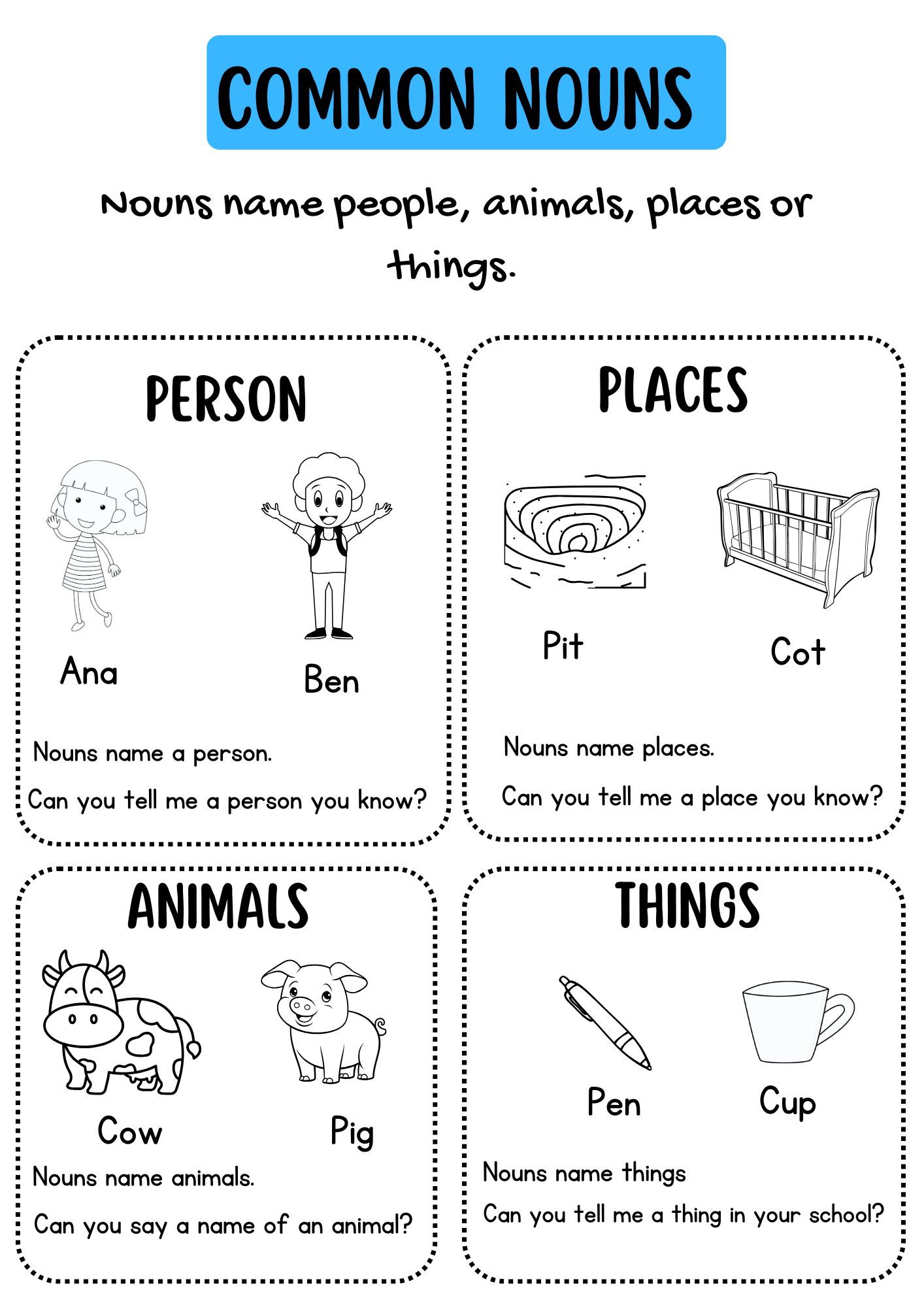
A noun is a person, animal, place, or thing. By breaking the concept down into these four steps, children can begin to identify the building blocks of language.
Examples often used to teach these categories include:
- Person: Ana, Ben, mum, or dad.
- Place: A pit or a cot.
- Animal: A cow or a pig.
- Thing: A pen, cup, or pot.
The Importance of Learning Nouns
Teaching nouns at the kindergarten level is crucial for several reasons:
- Vocabulary Building: Practice using specific names for what they see.
- Categorization Skills: Students learn to distinguish between a “person” and a “place”.
- Sentence Foundations: Identifying the main character in a sentence that is “who” or “what” the sentence is about is the first step toward reading comprehension and basic writing.
What’s Inside the Kindergarten Noun Worksheet?
An effective noun worksheet for kindergarten uses various interactive methods to keep students engaged:
Colouring Activities
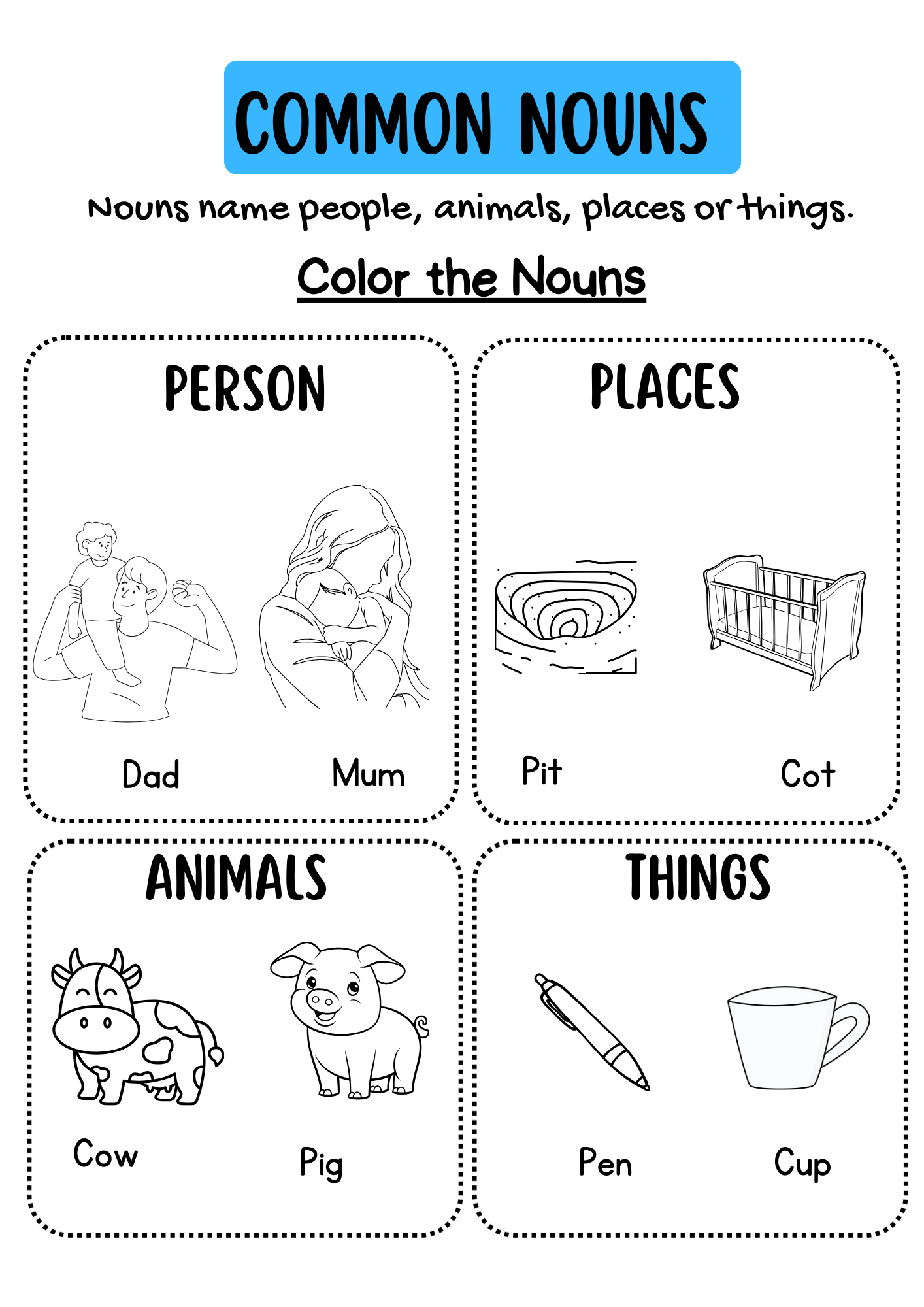
Children are asked to “Colour the Nouns” or use specific colour codes (e.g., Orange for Person, Green for Place, Red for Thing) to identify different categories.
Writing Practice
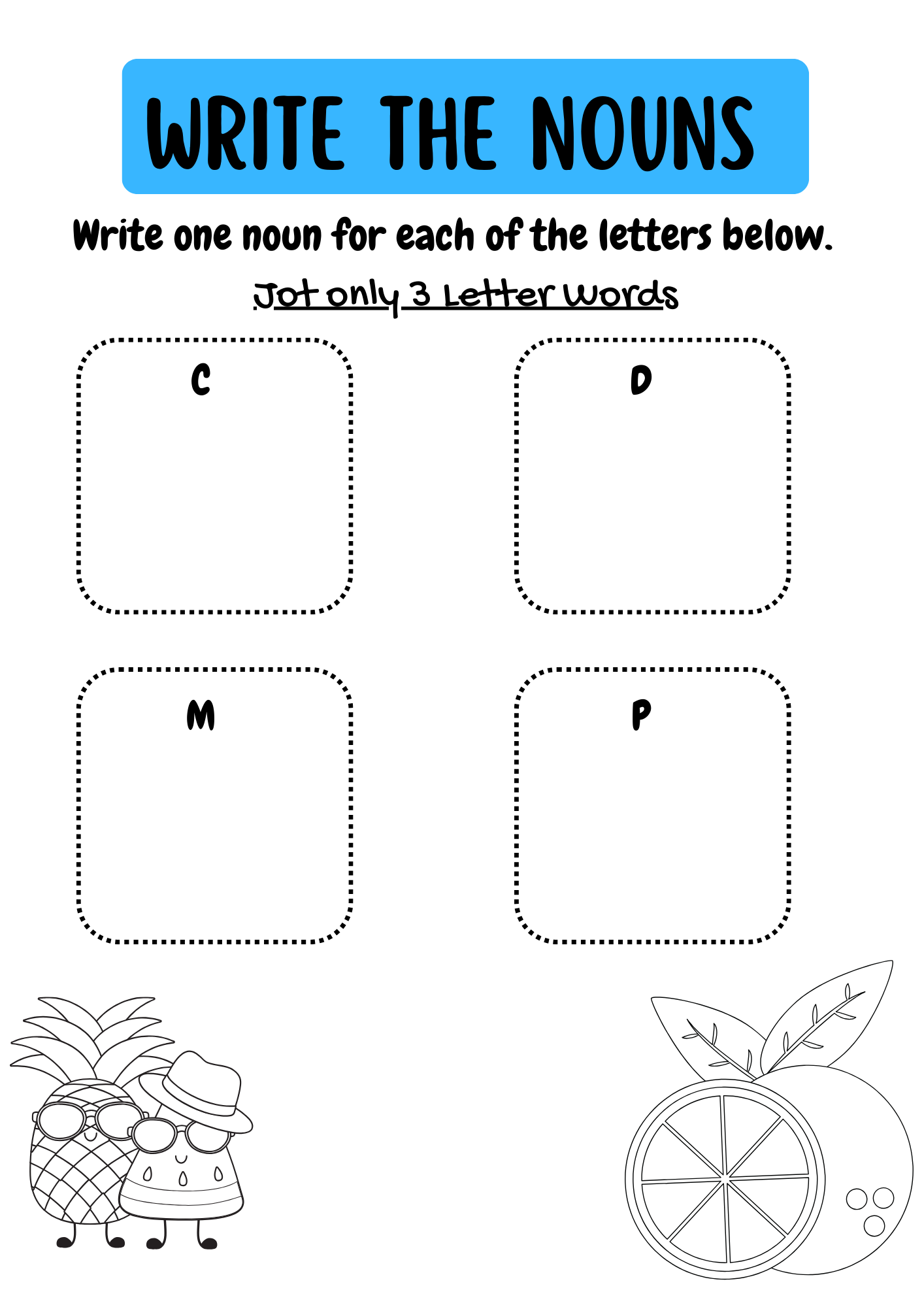
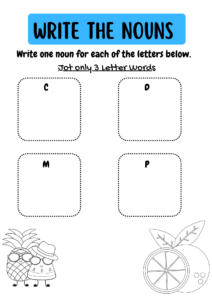
Tasks include writing a noun for a specific letter (like “C” for Cup or “D” for Dog) to reinforce spelling and letter recognition.
Drawing and Visualization
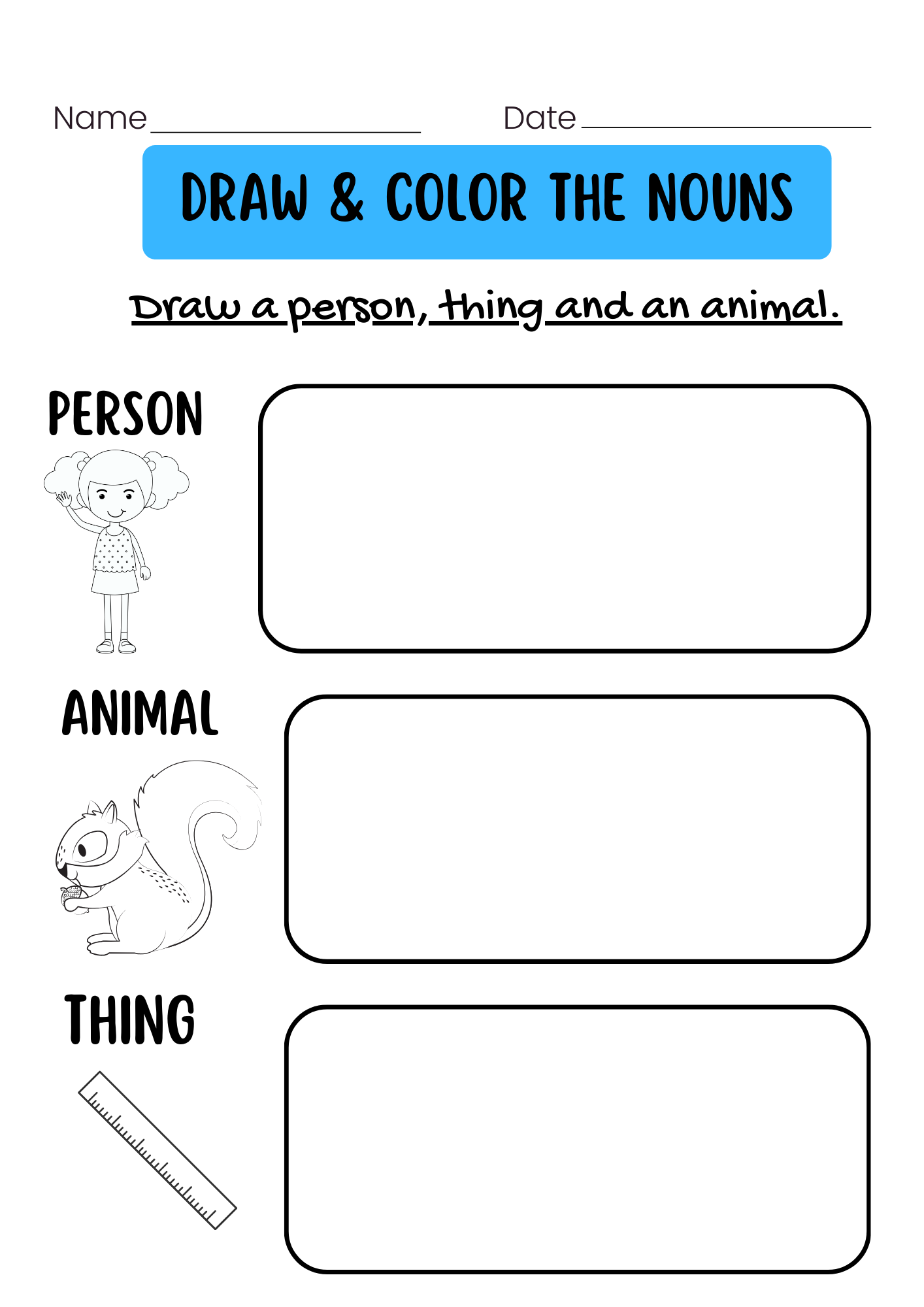
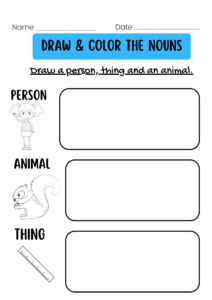
Exercises that ask students to “Draw and Colour the Nouns” help them connect abstract words to concrete visual images.
Sorting Tasks
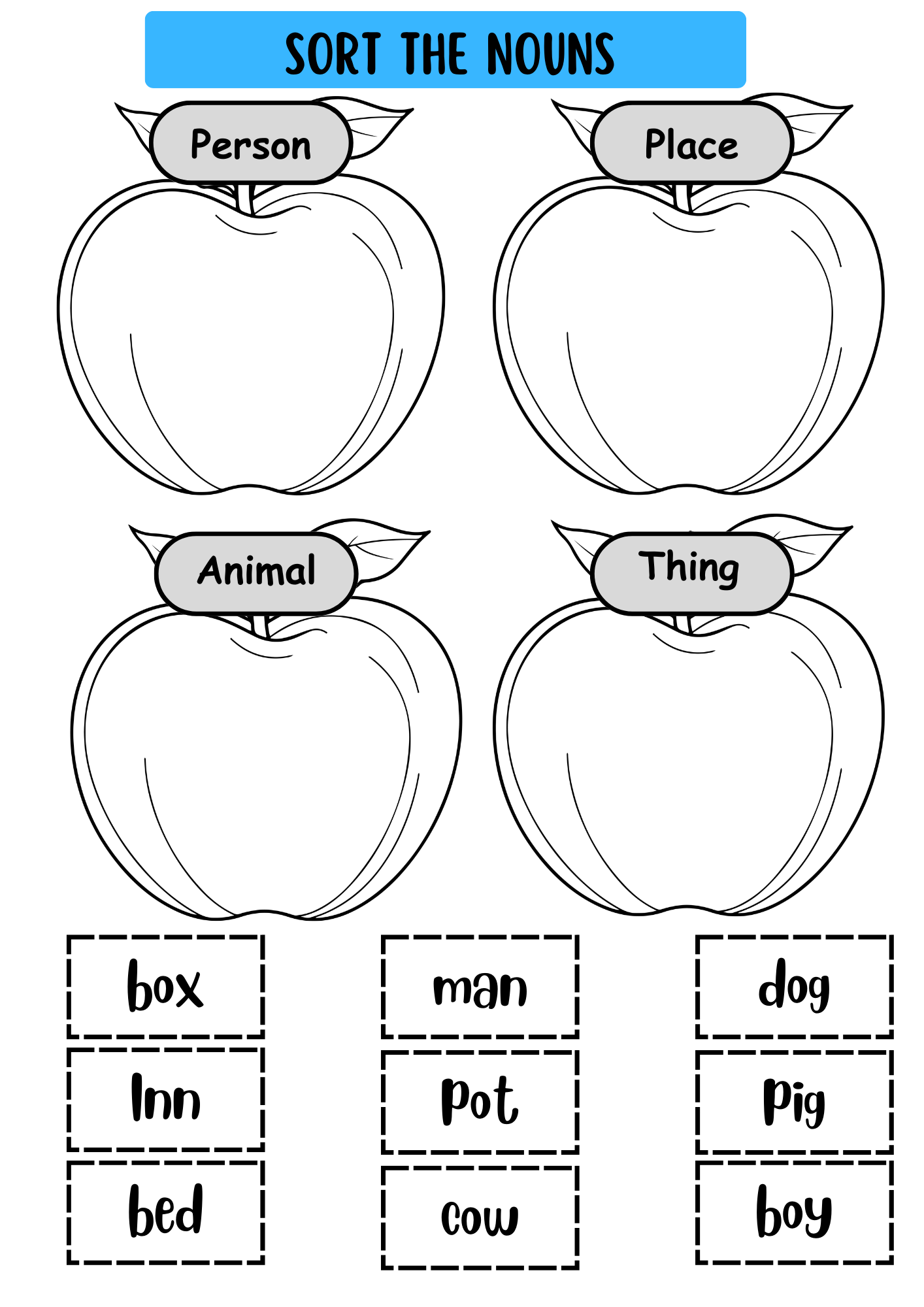
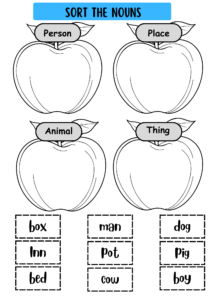
Students practice critical thinking by sorting words like “man,” “box,” “dog,” and “bed” into their correct columns.
Benefits of Using the Worksheet
Using a dedicated worksheet provides several academic and developmental benefits:
- Repetition Learning: By seeing, colouring, and writing the words, children are more likely to retain the information.
- Creativity Spark: Drawing and colouring make a grammatical concept feel like a fun art project rather than a chore.
- Understanding Recheck: These worksheets serve as a tool for teachers to see if a child can correctly identify a noun versus another type of words.
- Development of Critical Thinking: Asking questions like “Can you tell me a thing in your school?” prompts children to apply what they have learned on the page to their real-life environment.